
THE BULLET TRAIN TO NOWHERE HAS FAILED: The Indian Wells Valley Groundwater Authority’s AVEK Pipeline Project Has Failed Too

“California’s high-speed rail experiment, dubbed ‘the train to nowhere’ for its uselessness, has failed.” California Post Editorial Board, September 19, 2026
September 21st, 2026
Indian Wells Valley California
California’s “bullet train to nowhere” provides us the opportunity to examine the inherent flaws in California’s Sustainable Groundwater Management Act called “SGMA” (Sigma). AVEK stands for the existing “Antelope Valley East Kern” pipeline which currently terminates in California City.
The Indian Wells Valley Groundwater Authority wants to extend the AVEK pipeline 50+ miles to the north all the way to the Indian Wells Valley in order to import San Joaquin Valley water. This is another California boondoggle, a pipe dream and a fraud all rolled into one $400 million project. And it’s completely unnecessary.
“SGMA is a license to commit fraud, the Indian Wells Valley Groundwater Sustainability Plan (GSP) is a fraud, and the Indian Wells Valley Groundwater Authority is an abomination.” – Publisher of Roadrunner395.com
An editorial in the California Post brings clarity to the issue of failed projects and failed experiments in California’s public policy arena. From “NetZero” carbon taxes to groundwater “sustainability”, from EV mandates to grading the Mojave Desert to make way for massive solar farms, these are the issues that are making life in California unaffordable.
State and federal taxpayers already have lavished up to $15 billion, combined, on the debacle — with no tracks, no trains and no rail travel to show for it. Current estimated price tag for the project: $231 billion. – California Post Editorial Board
California leads the nation in failing big projects as well as screwing the environment, small farmers and working class taxpayers all at the same time.
State and local taxpayers already have lavished up over $20 million, combined, on the debacle – with no pipeline, no water purchased and no “sustainability” to show for it. Current estimated price tag for the project is $400 million. – Roadrunner395 Editorial
A recently disclosed investigation into the City of Ridgecrest by the Kern County District Attorney is an extension of a broader investigation that originates with the actions of three public officials surrounding the sponsorship of legislation called AB 1413 and AB 1466. The legislation was written in 2024 by the attorneys for the Indian Wells Valley Groundwater Authority, and it was introduced to Sacramento legislators in January of 2025.
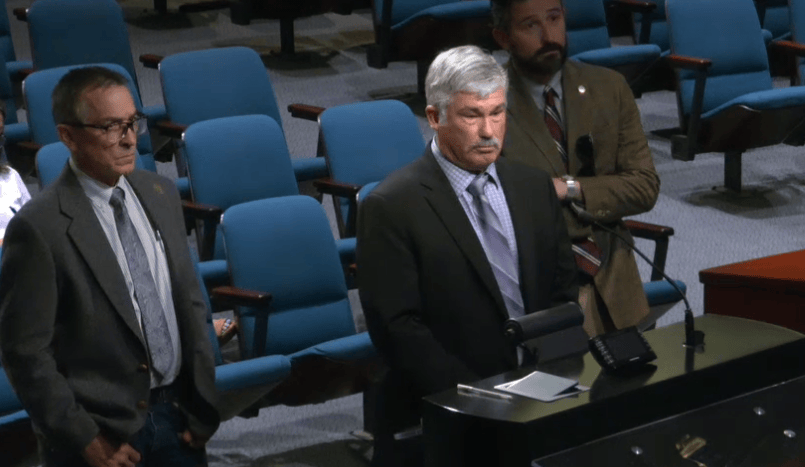
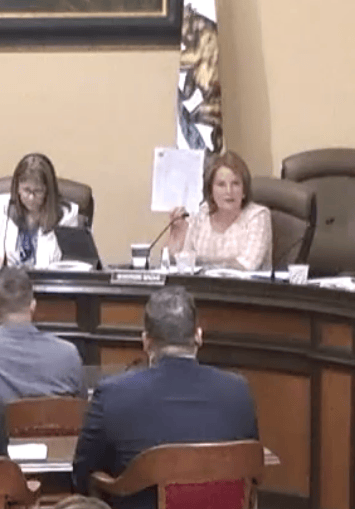
We now know that Ridgecrest’s councilmembers and top-level management, including the city manager and city clerk, have all been interviewed by the Kern County DA for violations of the Brown Act, California’s open meeting law. It’s what we call a full-blown investigation and it’s a prima facie case. The legislation was never discussed, voted on or reported out of a closed session nor were any discussions held on an agenda in open session of the Ridgecrest City Council. In other words, this was a clear violation of the Brown Act, with very serious implications.
In April of 2025, Ridgecrest’s city manager, Ron Strand, and two council members traveled to Sacramento with a letter of support for AB 1413. The letter was ostensibly prepared by city clerk Ricca Charlon, who admitted to preparing the undated letter which also had the city’s former mayor, Eric Bruen, on the letterhead. The letter was signed by Mayor Pro Tem Kyle Blades. One of the council members who traveled to Sacramento with Blades was Scott Hayman, was also the city’s representative on the Board of Directors for the Groundwater Authority.
AB 1413 was an attempt to circumvent the established due process rights inherent in California’s comprehensive adjudication process. In short: A comprehensive adjudication is the court’s definitive determination of all groundwater rights in a basin, setting legal priorities, quantities, and management rules, and is a key tool for resolving disputes and ensuring sustainable groundwater use in California.
Comprehensive Adjudication and The Phase Two “Safe Yield” Trial
SGMA created 164 Groundwater Sustainability Agencies, and approximately 140 GSA’s remain to regulate non-adjudicated groundwater basins. A comprehensive adjudication is a court‑led legal process that determines all groundwater rights in a defined basin, whether those rights are based on appropriation, overlying rights, or other legal bases. It is the most complete form of groundwater adjudication in California and is governed by Code of Civil Procedure § 834 and related provisions.
The “Safe Yield” is the most important “science” and determining factor for recharge of a basin and the water rights thereto. It’s what is referred to in layman’s terms as the “Pie”. Comprehensive adjudication divides up the pie amongst the water rights holders. In the case of the Indian Wells Valley basin, the size of the pie didn’t rely on the “best available science”, it was fixed from the beginning of the development of the GSP.
Using multiple independent analytical methods, those analyses consistently converge on the same conclusion: the Basin’s safe yield is substantially greater than 7,650 AFY—conservatively no less than 14,300 AFY and approximately 15,400 AFY. – Indian Wells Valley Technical Working Group
The IWV Groundwater Authority Didn’t Want the Judge to Adjudicate the Safe Yield of the IWV Groundwater Basin
We know that the two pieces of legislation were written sometime in 2024, and by January of 2025, the GA’s lobbyist Capitol Core Group was searching for a sponsor in the California Assembly. Ultimately, after being rejected by at least 10 members of the legislature, all for unique reasons, AB 1413 and AB 1466 found a sponsor in Assemblymember Diane Papan.
Copies of emails sent by Capitol Core’s CEO, Michael McKinney, to Paul Gosselin, the director of SGMA at the Department of Water Resources, may be found below. Attorneys involved in writing the legislation and staff members at the legislature and the Governor’s office were lobbied to support the legislation. Stiff opposition to AB 1413 and AB 1416 included large agriculture lobbies, the California Association of Realtors and the California Chamber of Commerce.
The intention of AB 1413 was to avoid the Phase Two “Safe Yield” portion of the comprehensive adjudication process that was set to begin in June of 2026. The GA argued that the science was set in stone and that a judge would be unqualified to decide the Safe Yield after hearing lengthy testimony by expert hydrogeologists.
Using the example of “California’s high-speed rail experiment”, the California Department of Water Resources and the Indian Wells Valley Groundwater Authority could learn a thing or two from the failure of California’s grandiose bullet train project. It was to be a two hour and 40-minute extremely fast, 500-mile ride through central California from San Francisco to Los Angeles and it would only cost “$42 billion dollars”. It would be better than taking a jet plane!
Consultants and Engineers Gone Wild
The Indian Wells Valley Groundwater planned to import water through a $200 million, 50-mile pipeline project that will likely cost upwards of $500 million when all is said and done. It will fail too.
While the authority has failed to curb consultants gone wild, the project’s budget is untenable: High-speed rail is projected to run dry of cash in 2027, the audit found. Who can justify pouring more tax money into this mess? – California Post Editorial Board
Which “authority” is the California Post Editorial Board talking about here? The Indian Wells Valley Groundwater Authority has no staff, and none of the board members are elected to their positions by the people, they’re appointed by their respective agencies. In the case of this GSA, the five-member board consisted of representatives from Inyo County, San Bernardino County, Kern County, the City of Ridgecrest and the IWV Water District.
The “staff” of the GA consists of consultants, engineering firms, lobbying and public relations firms, among other companies under contract with the GA. And finally, the Groundwater Authority is running out of the cash needed to buy both the imported “Table A” water rights and the ongoing, over-budget design of the pipeline, which hasn’t yet reached the 90% design stage. The GA hasn’t yet re-applied for the Environmental Impact Survey with the BLM which was delayed due an incomplete application prepared by Stantec, Inc..
The parallels to the failed bullet train and the Groundwater Authority’s pipeline experiment are readily apparent. The GA hasn’t bought a single drop of “Table A” water to import through the pipeline because they have nobody to sell it to and not enough “Replenishment Fees” left to buy what they say the IWV needs to achieve “Sustainability” under SGMA. (The only people paying the “Replenishment Fee” are IWV Water District Customers and residents of the City of Ridgecrest)
SGMA is a Band Aid over California’s festering mismanagement of its plentiful water resources.
In 2014, then Governor Jerry Brown signed California’s landmark groundwater law called the Sustainable Groundwater Management Act or “SGMA”, hailing it as “democracy in action”. At the same time, the state was in the middle of a long-term drought and voters had just passed a hefty $7.12 billion funding authorization so the state could construct new reservoirs.
Proposition 1 (passed by voters, also in 2014) authorized $7.12 billion in general obligation bonds for water supply infrastructure, and $2.7 billion of that was dedicated to the Water Storage Investment Program (WSIP) for public benefits from water storage projects
As you would expect, a good portion of the Prop 1 money has been spent defending against lawsuits filed by the state’s radical environmental lobby, including of course the Sierra Club, and no reservoirs have been built nearly 12 years later.
“We’re losing our snowpack” were the cries heard at the 10th Anniversary celebration of SGMA which was held in Sacramento in November of 2024. (No Felicia, we’re not losing our snowpack forever) SGMA was designed to restrict over pumping in the San Joaquin Valley. Reservoirs and groundwater supplies are needed during drought, or until such time as the drought runs its course and the snowpacks return to normal. California should have been building those reservoirs instead of spending more billions on the implementation of SGMA.
In actuality, SGMA was a band aid covering the festering sore in the long-running mismanagement California’s plentiful and most important natural resource – surface water runoff from the Sierra Nevada mountain range’s annual snowpack.
“Undesirable Results”: One-fifth of the San Joaquin Valley to be fallowed, 85,000 lost jobs, and $7 billion per year in economic losses
According to a 2020 study by two UC Berkeley professors, David Sunding and David Roland-Holst, the undesirable result of SGMA will be the fallowing of nearly 1,000,000 acres of irrigated farmland, the loss of over 85,000 jobs and $7 billion in annual losses to the agriculture economy. The estimates here are six years old and the timeline is two to three decades.
For more information from an article at FarmProgress.com, click here. The UC Berkeley Study is below.
A 25 year “Megadrought”
California is in the midst of an extreme water shortage crisis, exacerbated by a megadrought that began in 2000 and by cutbacks to allocations of Colorado river water which were just announced by the Bureau of Reclamation. The two largest reservoirs on the Colorado river, Lake Powell and Lake Mead, are approaching “dead pool” status.
As Roger Dickerson, a former assemblyman who sponsored SGMA likes to say, “the history of California is the history of water”. It’s true, all wealth flows from the land, and water created the wealth in California. Today, the State of California and the Department of Water Resources are destroying that wealth with SGMA.
SGMA is the worst piece of legislation to come out of the California’s climate change nonsense in the last 25 years. The law is even more egregious than mandating EV’s and shuttering oil refining capacity. It’s more appropriate to call it a “taking” under the 5th Amendment of the U.S. Constitution.
“What moves faster than California’s high-speed rail, nearly 20 years in the making with zero track laid?” – California Post Editorial Board
Due to delays in the environmental studies, which were apparently subcontracted out to Stantec, Inc. by Provost & Prichard, the engineering firm contracted for the pipeline design, the EIR and application with the Bureau of Land Management must be re-submitted with another public comment period.
“The AVEK Pipeline will most likely never be built. The Indian Wells Valley is not running out of water. There’s more water in the IWV basin than can fill Lake Mead, and nearly enough potable water to fill both Lake Mead and Lake Powell.” – Roadrunner395 Editorial
Federal Grants and the Water Resources Development Act – “Somebody else is paying for it”.
The pipeline project can’t be financed in the bond market, and due to uncertainty, the anticipated grant under the Water Resources Development Act, which was on tap to finance 75% of the entire project, is highly doubtful. The GA recently discontinued negotiations for the purchase of “Table A” water rights.
The design of the pipeline project itself has been delayed and is over budget, and this is after the GA burned through a premature $7.6 million grant from DWR for the engineering work.
The imported water pipeline project was rushed and it was a costly mistake, on DWR’s part, to grant the money before the anticipated comprehensive adjudication process could run its course.
Who can justify pouring more tax money into this mess? (Quoting verbatim from The Editorial Board of the California Post regarding the bullet train to nowhere.)
SGMA is a failed experiment, just like the bullet train only worse.
Documents Obtained via a Public Records Act Request
The following three documents were obtained as a result of a Public Records Act request to the Kern County Counsel’s Office. They are email threads in February of 2025 between Capitol Core Group, Michael McKinney CEO, and various public officials in Sacramento, including Paul Gosselin, the head of SGMA implementation at the Department of Water Resources.
These documents have been submitted to the Kern County District Attorney in order to assist them in the investigation of the City of Ridgecrest’s and the Groundwater Authority’s involvement in sponsoring the legislation called AB 1413 and AB 1466.
The residents in the Indian Wells Valley Water District and the City of Ridgecrest are paying for all of this.
SGMA Legislative Proposal.pdf
SGMA Legislative Proposal 3.pdf
SGMA Legislative Proposal 4.pdf
Follow on Facebook:




- roadrunner395
- SAY IT ISN'T SO! An AI Data Center is Coming to Downtown Inyokern? UPDATE September 21st, 2026 - Newsom Changes Tune on Data Centers - Signs Seven Bills Regulating Them September 21, 2026
- THE BULLET TRAIN TO NOWHERE HAS FAILED: The Indian Wells Valley Groundwater Authority's AVEK Pipeline Project Has Failed Too September 21, 2026
- Another cryptic message has been posted on the White House "X" account: "Something's Coming. Stay Tuned." September 21, 2026
- DON'T LET THE IWV GROUNDWATER AUTHORITY FOOL YOU: Their Fraudulent Actions Have Cost Residents and Businesses MILLIONS IN DAMAGES to the Local Economy and to Your Property Values! (UPDATE With the September 16th, 2026, City Council Meeting VIDEO) September 16, 2026
- UPDATE: THE DAILY INDEPENDENT Confirms Kern County DA Investigation of the City of Ridgecrest - City Manager Travis Reed Hints at Possible FBI "Inquiry" September 11, 2026
You must be logged in to post a comment.